
02
Dish 2 of 7 · In Thailand
Magic mushrooms in Thailand, from buffalo pasture to island shake
Wild cubensis on buffalo dung, the mushroom omelettes and shakes of Koh Samui and Koh Phangan, the raids and the risks. What research and the record show.
Updated
Psilocybin mushrooms grow wild in Thailand, mostly Psilocybe cubensis on the dung of water buffalo and cattle, and since at least the 1980s they have been sold to tourists on the islands of Koh Samui and Koh Phangan, first in omelettes and soups, later in shakes. All of it is illegal: magic mushrooms are a Category 5 narcotic under Thai law, and both sellers and buyers are prosecuted. This page sets out what researchers and the public record have documented.
Wild mushrooms on buffalo pasture
The most detailed account comes from the ethnobotanists John W. Allen and Mark D. Merlin, who made five field trips to southern Thailand in 1989 and 1990, mainly to Koh Samui and Koh Pha-ngan, with extra fieldwork in Chiang Dao in the north and Surat Thani province (Allen and Merlin, 1992). They found:
- seven collections of P. cubensis or the closely related P. subcubensis, and four of Copelandia, a group of small dung mushrooms that also bruise blue;
- the first published records of P. subcubensis and Copelandia in Thailand;
- mushrooms appearing spontaneously, or after deliberate cultivation, on the decomposed manure of water buffalo (Bubalus bubalis) and at least three kinds of cattle;
- strong blue bruising when the mushrooms were handled, a sign of psilocybin and psilocin.
The link with buffalo manure also shows up away from pasture. In a later update Allen and colleagues describe a single cubensis found on a lawn at 1,000 metres in a national forest in Tak province, where powdered buffalo manure had been spread as fertiliser. Collectors in the same years also described a small new species from Koh Samui rice fields, Psilocybe samuiensis, which is unrelated to the Thai cultivar (see the Thai cultivar).
The island trade, as researchers saw it
Allen and Merlin observed the whole chain on Koh Samui: mushrooms grown in clandestine plots, indoors and outdoors, by Thai villagers and some foreigners; harvests sold directly to tourists and to resort restaurants; and menus with mushroom omelettes and mushroom soups. They also recorded a darker detail. Some restaurants sold "mushroom" omelettes laced with synthetic hallucinogens, so a buyer could not know what was in the dish. Mushroom motifs on hand painted T-shirts, postcards and posters were part of the same tourist economy.
Allen kept returning to the region until 2006 and published an update with Thai and European co-authors (Allen et al., Ethnomycological Journals vol. IX). It gives the local name, hed kee kwai, which they translate as the mushroom that appears after the water buffalo has defecated. According to that update the mushrooms were made illegal in 1989, and by 1992 mushroom omelettes, smoothies, soups and pizzas had disappeared from many printed menus. Resort chefs would still prepare an omelette on request, and between 1998 and 2000 Allen saw new restaurants on Koh Pha-ngan and Koh Tao serving mushroom omelettes again.
Today the best known form is the shake: mushrooms blended with fruit and ice, sold by the glass or the jug at bars near the party beaches of Koh Phangan.
What the shakes are, and what is not known about them
A mushroom shake is a blended drink of mushrooms, fruit, ice and often sugar or alcohol. From a safety point of view, three things stand out.
- The dose is unknown. The bar decides how many mushrooms go into a jug, and the strength of the mushrooms varies by cultivar, flush and storage. A glass can contain very little or a great deal.
- The contents are unknown. The record from Koh Samui shows dishes adulterated with other drugs. In the 2018 raid described below, police found mushroom drinks next to cylinders of nitrous oxide.
- The setting is the opposite of calm. Loud parties, heat, alcohol, strangers and a long way home are the situations that come up most often in difficult experiences.
Dutch-Smart's own product text mentions that Thai mushrooms are famous for the "magical, happy milkshakes" made with them. The name carries that reputation. It does not change the legal position in Thailand.
Raids and cases on record
| Date | Place | What happened | Source |
|---|---|---|---|
| 1989 to 1990 | Koh Samui, Koh Pha-ngan | clandestine cultivation and sale to tourists and restaurants documented in the field | J Ethnopharmacol, 1992 |
| January 2018 | Haad Rin, Koh Phangan | police and army raid a beach bar during a party; about 30 litres of fruit drinks and 20 litres of smoothies with mushrooms seized, plus nitrous oxide; the owner said a glass sold for 300 baht | Khaosod English |
| December 2024 | Mae Rim, Chiang Mai | a British tourist dies at a resort after eating mushrooms suspected to be magic mushrooms, bought in a shop on Tha Phae Road; arrests after a police sting, cause of death still under investigation at the time | Thai FDA |
The Chiang Mai case shows that the trade has moved beyond the islands. Shops in tourist areas have offered mushrooms openly, and the Thai Food and Drug Administration responded with a public warning that spelled out the penalties.
If you are travelling in Thailand
An open sale on a beach or in a shop is not a sign of tolerance. Possession and use carry up to one year in prison or a fine of up to 20,000 baht or both, and selling carries far more, as the law page explains. Foreigners are not exempt. There is no legal way to buy, carry or take magic mushrooms in Thailand, and this site does not suggest any.
In the Netherlands the position is different for one product: a grow kit can be bought legally, although the mushrooms are illegal once they appear. The Thai line is sold there as a kit and as spores.
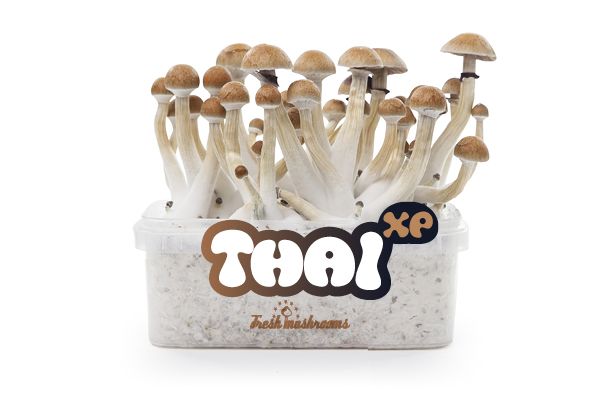 Thai - FreshMushrooms Magic Mushroom Grow Kit
Dutch-Smart
€39.50Order
Thai - FreshMushrooms Magic Mushroom Grow Kit
Dutch-Smart
€39.50Order
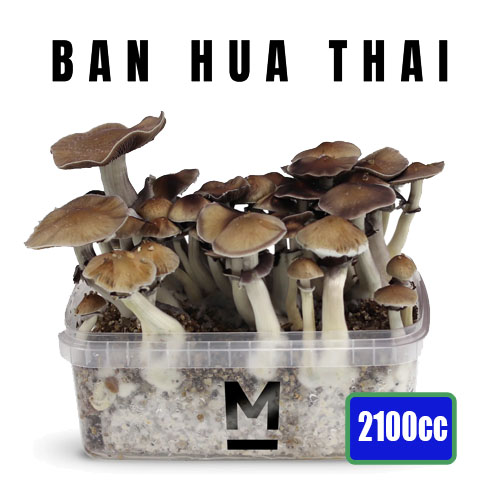 Thai XXL - 2100cc Mushroom Grow Kit
Dutch-Smart
€49.95Order
Thai XXL - 2100cc Mushroom Grow Kit
Dutch-Smart
€49.95Order
Read on: the law in Thailand and the Netherlands, how strong Thai is and the effects as described.