
01
Dish 1 of 7 · The Thai cultivar
What the Thai and Koh Samui cultivars are
Thai and Koh Samui Super Strain are cultivar names of Psilocybe cubensis. What the names claim, what is documented, and how they differ from P. samuiensis.
Updated
"Thai" is a cultivar name for Psilocybe cubensis, the same species as Golden Teacher, B+ or Mazatapec. The name says that the original culture was collected in Thailand, usually on the island of Koh Samui, which is why the same line is also sold as "Koh Samui", "Thai Koh Samui" or "Koh Samui Super Strain". It is a name from the growing hobby, with no botanical standing. There is no published record that ties a commercial Thai culture to one specific collection.
Three names, one species
In Dutch shops and spore catalogues you meet the Thai line under several labels:
| Name on the label | What it refers to |
|---|---|
| Thai | Psilocybe cubensis, culture said to come from Thailand |
| Koh Samui, Koh Samui (Thai) | the same claim, narrowed to the island in the Gulf of Thailand |
| Koh Samui Super Strain | a selection sold under the Koh Samui name by spore vendors |
| Thai Cubensis | the label used in the 2024 laboratory study discussed on the strength page |
Dutch-Smart currently sells the line as "Thai", as a grow kit and as spores. A separate spore syringe labelled "Koh Samui (Thai)" appears in the same catalogue but is sold out at the time of writing. Whether shops that use different labels sell genetically identical material is unknown. A 2025 review of cubensis strains points out that cultivars with the same name often lack genetic similarity across suppliers, and that most strain descriptions come from community reports, not from research (Kurzbaum et al., 2025).
Where the origin story comes from
The Thai name rests on something real: Psilocybe cubensis does grow wild in Thailand, and it has been collected there for decades. The best documented fieldwork is by John W. Allen and Mark D. Merlin, who made five trips to Koh Samui and Koh Pha-ngan in 1989 and 1990. They collected cubensis (or the very similar P. subcubensis) on the decomposed dung of water buffalo and cattle, and they described how the mushrooms were grown in clandestine plots on Koh Samui and sold to tourists (Allen and Merlin, 1992). The page on mushrooms in Thailand covers that history.
Since the species is common on Thai pastures, a culture from Thailand is entirely plausible. What is missing is the chain of custody: who took the first spore print, when, from which field, and how the line reached European suppliers. None of that is published. Read statements such as "collected from buffalo pasture on Koh Samui in the 1990s" as part of the name, not as a fact you can check.
The namesake that is a different mushroom
Searching for Koh Samui mushrooms quickly leads to Psilocybe samuiensis. Despite the name, it has nothing to do with the Thai cubensis cultivar.
- P. samuiensis was described as a new species in 1993 by Guzmán, Bandala and Allen, from material found on Koh Samui.
- It is small: the cap is 7 to 15 mm across. A cubensis cap is several centimetres.
- It grows in rice fields, never directly on dung, and fruits in July and August (Wikipedia summary of the original description).
- It is placed in section Mexicanae of the genus, the group named after P. mexicana, one of the species behind Dutch magic truffles.
- A 1994 analysis measured 0.23 to 0.90% psilocybin in dried fruit bodies, highest in the caps, plus small amounts of baeocystin (Gartz, Allen and Merlin, 1994).
A third name sometimes turns up in older lists: Psilocybe thaizapoteca, described from Thailand. A 2013 study of the type material concluded that it is the same species as the Japanese P. subcaerulipes (Guzmán et al., 2013). Neither of these species is sold in Dutch shops. When a shop says Thai or Koh Samui, it means cubensis.
What a Thai mushroom looks like
Thai fruits as a typical cubensis: a brown to caramel cap that starts rounded and opens flat, a pale stem with a thin ring zone, gills that turn purple-black as spores ripen, and blue bruising where the flesh is handled. Shop descriptions add a few growing traits specific to this line, which are on the grow kit page. Nothing in its appearance lets you tell Thai from other cultivars with certainty. Only the label on the kit tells you what you are growing.
Thai products at Dutch-Smart
These are the Thai products in stock at Dutch-Smart. A kit is the simplest route; spores are for people who already work with sterile technique. Both are sold legally in the Netherlands. The mushrooms themselves are illegal there once they appear, and in Thailand every stage is illegal. Read the law before you order.
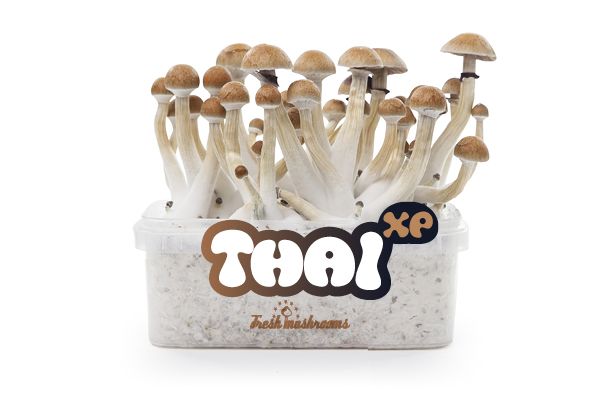 Thai - FreshMushrooms Magic Mushroom Grow Kit
Dutch-Smart
€39.50Order
Thai - FreshMushrooms Magic Mushroom Grow Kit
Dutch-Smart
€39.50Order
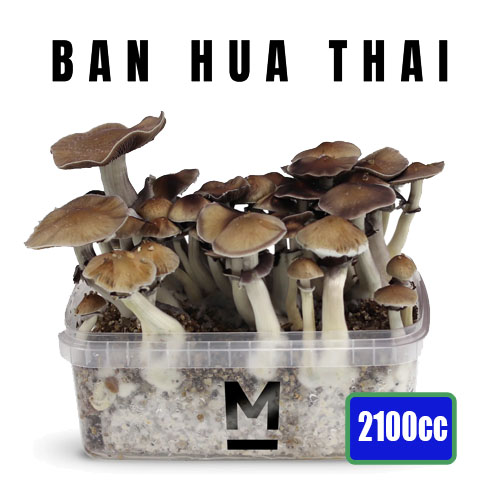 Thai XXL - 2100cc Mushroom Grow Kit
Dutch-Smart
€49.95Order
Thai XXL - 2100cc Mushroom Grow Kit
Dutch-Smart
€49.95Order
 Thai - Spray 20 mL
Dutch-Smart
€14.90Order
Thai - Spray 20 mL
Dutch-Smart
€14.90Order
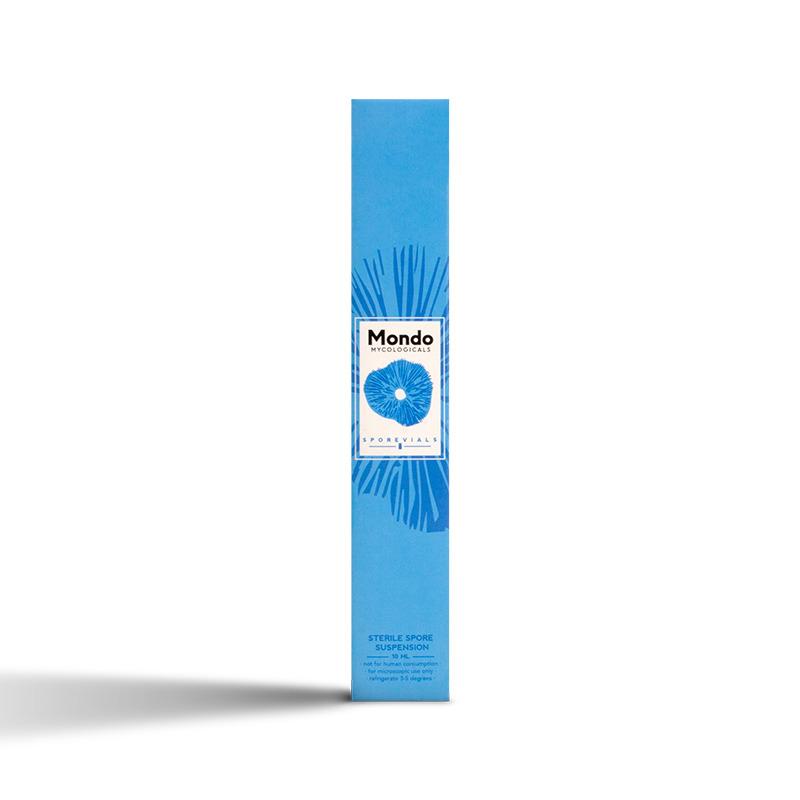 Thai - Sporen ampoule | 10 ml
Dutch-Smart
€14.90Order
Thai - Sporen ampoule | 10 ml
Dutch-Smart
€14.90Order
Prices include VAT and come straight from the shop. Next: how strong Thai is according to the one laboratory study that measured it, or which kit to choose.